


What Is the Best Synthetic Leather Conditioner for Black Vinyl?
The best synthetic leather conditioner for black vinyl is Leather Black by Doc Bailey's. It cleans, conditions, re-dyes, and waterproofs black vinyl in one application, and it dries in 10 seconds. The same bottle does the black leather, black canvas and black rubber trim on the same piece, so a faded vinyl seat, saddlebag or tonneau cover comes back to day-one black with a dry finish nothing sticks to.
Key Takeaways
- Leather Black cleans, conditions, re-dyes, and waterproofs black vinyl, black leather, black canvas and black rubber trim.
- Real black dye sealed under wax is the ultimate UV barrier, so the black holds instead of fading out again.
- It is colorfast: the dye is locked in by the wax and won't come off on you. On a seat it is not slick or slippery.
- Pure lanolin oil, no silicone, no alcohol, no solvents, no petroleum distillates. Made in the USA, over 35 years of use, trusted since 1991.
- Black vinyl that has already cracked or torn is a job for the Multi-Color Re-Dye & Repair Kit by Doc Bailey's.
What Is the Best Synthetic Leather Conditioner for Black Vinyl?
Synthetic leather, sometimes called faux leather, pleather, or vinyl leather, has no natural pores or fibers to absorb oil-based treatments. As a result, conditioners made from mink oil or neatsfoot oil tend to sit on top of the surface instead of soaking in, and animal fats go rancid. Leather Black is a special formula built on pure lanolin oil, which never goes rancid, plus a wax with real black dye in it.
On black vinyl it does four jobs at once. It cleans: the sponge scrub lifts out road grime, salt and old wax. It conditions: the lanolin keeps the surface soft. It re-dyes: real black dye, not a temporary tint, brings sun-faded vinyl back to black. It waterproofs: the wax sets up on the surface as a 100% waterproof layer that locks the dye and oil in. For a closer look at why that dry finish matters, see this guide on conditioning leather without leaving residue.
Why Does Black Vinyl Fade, Stiffen and Start to Crack?
Genuine leather is organic, so it dries out over time and needs oils put back. Synthetic materials are closer to painted plastic. According to general material science references on artificial leather, most synthetic leathers use a polyurethane or PVC coating bonded to a woven or knit base. That coating does not absorb moisture or oil the way hide does, and the sun works on the black pigment in the top layer.
Common Problems With Faux Leather and Vinyl
Furniture and automotive care sources often note that PU (polyurethane) coatings typically begin peeling within three to five years under regular use, compared to decades for well-maintained genuine leather. Fading, stiffening, and surface cracking usually show up first, particularly on motorcycle seats, saddlebags and car seats parked in the sun. Catching black vinyl while it is faded and starting to crack is the time to treat it. Leather Black puts the black back and seals it under wax, and that wax with real black dye in it blocks the UV that faded the surface in the first place.
Why Do Silicone Products Fall Short on Black Vinyl?
Silicone leaves a sticky, slimy shine that attracts dirt and dust, and on a seat it can feel slick. Shine is not protection. Leather Black leaves a dry finish nothing sticks to, and two months later it still looks as good as the day it was treated. On a motorcycle seat it is not slick or slippery; it dries and all you feel is soft, clean vinyl. This piece on silicone-free leather care explains why the ingredient list matters as much as the price tag.
How Do You Use Leather Black on Black Vinyl?
Leather Black is the fastest, easiest and best possible treatment for black vinyl. It does the whole job in one application, in seconds:
- Put a little on the sponge. About a dime-sized amount of Leather Black is plenty. The less you use, the better it works.
- Scrub the vinyl. Scrubbing with the sponge cleans the surface and lifts the dirt out.
- Glaze a little more on top. The oil soaks in and the wax sets up on the surface.
- Let it dry. It dries in 10 seconds.
- Go back an hour later and buff. Give it a buff with a rag to pick up any excess and seal the waxes.
On black rubber trim and weatherstripping next to the vinyl, saturate the sponge and wipe the trim down. It comes back black, and it makes the trim look new rather than detailed. Same buff an hour later.
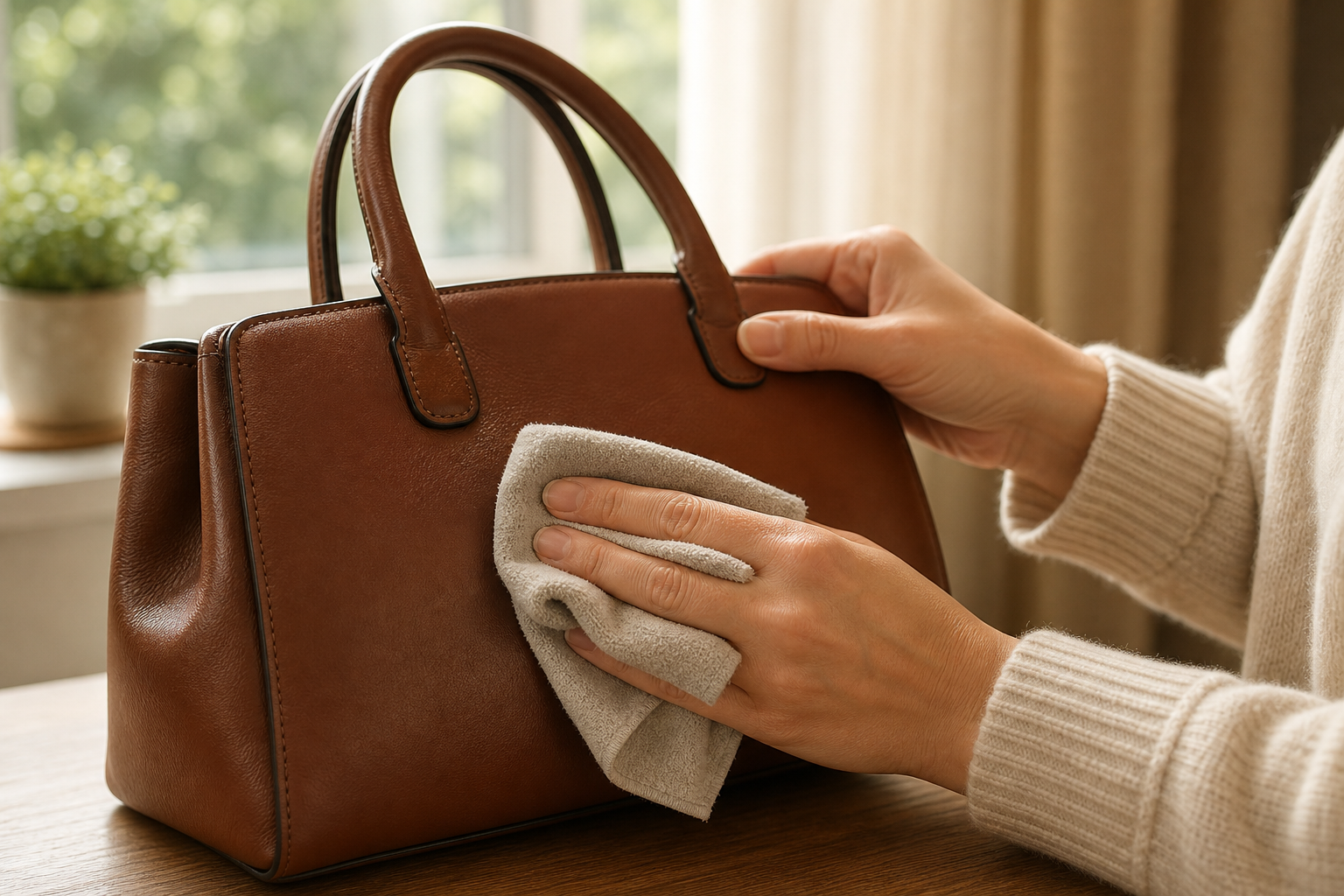
A thin application is all it takes. With Leather Black, the less you use, the better it works.
What Can You Treat With One Bottle of Leather Black?
Leather Black works on black surfaces across the bike, the car and the house:
- Black vinyl motorcycle seats and saddlebags
- Black vinyl and leather car seats and a complete car interior
- Black leather jackets, chaps, vests and boots
- Black canvas and tonneau covers
- Black rubber trim, weatherstripping, window seals and running boards
- Black exotic leathers
One bottle does a leather jacket 30 to 40 times, saddlebags 25 to 30 times, 50 pairs of boots, or a complete car interior 2 to 3 times. Stitching is where gear usually fails first: dry material shrinks and pulls its own stitching apart, which is stitch-rot. The lanolin keeps the stitching soft and conditioned, and the wax protects it from the elements. For seats in particular, see how to keep leather seats from cracking.
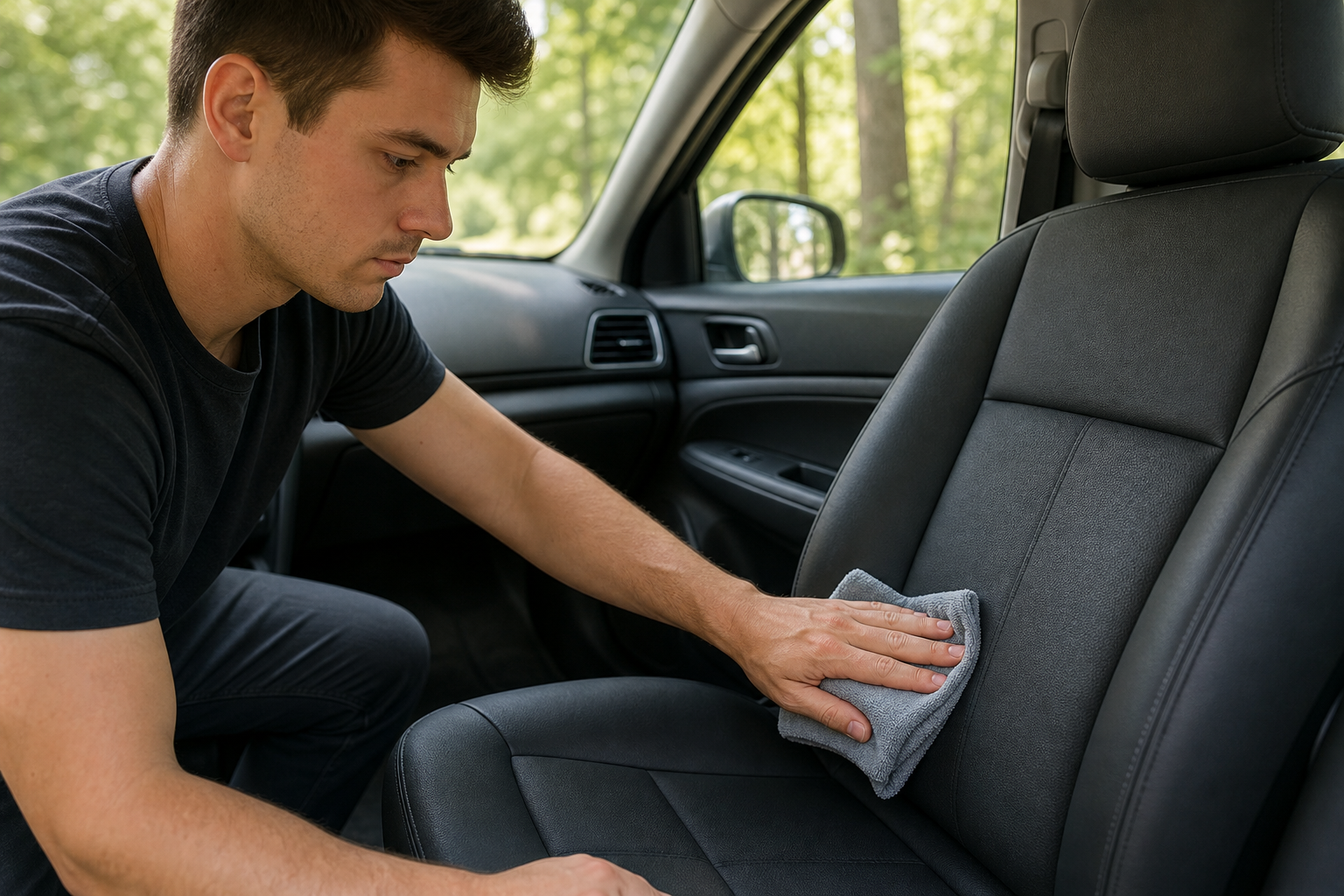
Black vinyl car seats get the same scrub, glaze and hour-later buff as black leather.
Synthetic Leather vs. Genuine Leather: How Care Differs
Genuine leather is porous and benefits from lanolin that soaks into the fibers and never goes rancid, which, as noted in general references on lanolin, also helps reduce the conditions that feed mold. Synthetic leather does not have that same absorbency, so the two differ in a few key ways. On black, Leather Black handles both.
| Factor | Synthetic Leather | Genuine Leather |
|---|---|---|
| Material structure | Plastic coating (PU/PVC) over fabric backing | Porous animal hide |
| What Doc Bailey's uses on black | Leather Black | Leather Black |
| Main failure mode | Peeling, stiffening, surface cracking | Drying out, fading, mold on storage |
| Typical lifespan | 3 to 5 years per coating cycle | Decades with regular conditioning |
How Do You Keep Stored Black Vinyl From Mildew and Cracking?
Although synthetic leather lacks the organic fibers that feed mold the way genuine hide can, dust and trapped moisture on the surface still create a breeding ground for mildew during long storage. Keep vinyl items clean, dry, and stored somewhere ventilated rather than sealed in plastic. A light application of Leather Black before storage cleans the surface and leaves a waterproof wax layer that seals out humidity. For storage habits across every leather type, the full leather care 101 reference covers it in more detail.
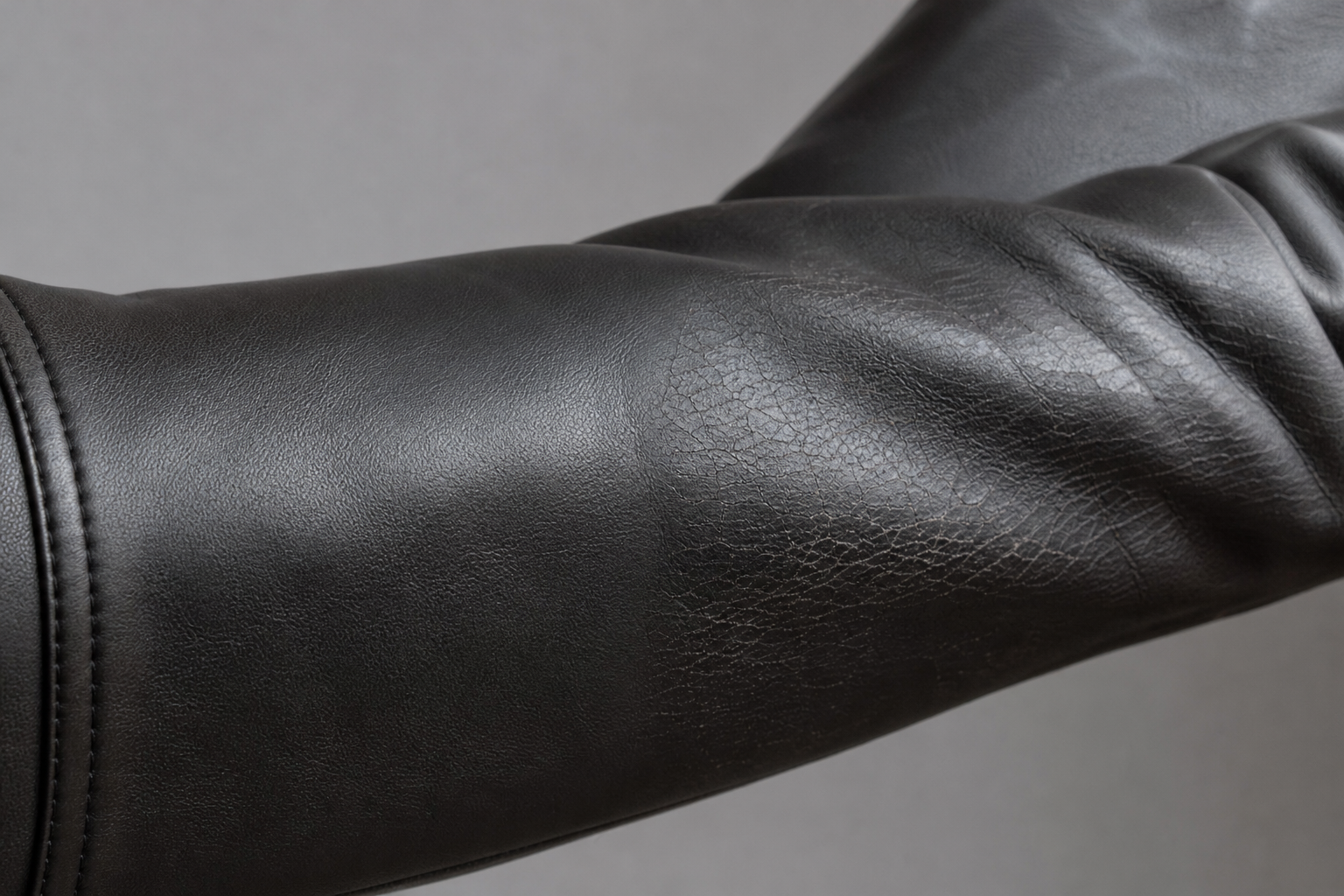
Treat black vinyl while it is faded and starting to crack, before the coating splits.
Good to Know
- Leather Black is for black surfaces only. It carries real black dye.
- Use a little. A heavy coat only leaves more excess to buff off an hour later.
- Let it dry on its own. It dries in 10 seconds, so heat is not needed, and heat can warp or shrink a plastic coating.
- Leather Black stops black vinyl that is faded and starting to crack. Cracks, tears, burns and holes are a job for the Multi-Color Re-Dye & Repair Kit by Doc Bailey's.
Frequently Asked Questions About Synthetic Leather Conditioner
What is a synthetic leather conditioner?
A synthetic leather conditioner is a product made to clean, soften, and protect man-made materials such as PU, PVC, and vinyl. On black vinyl, Leather Black does that job and more: it cleans, conditions, re-dyes, and waterproofs in one application.
How is synthetic leather conditioner different from regular leather conditioner?
A regular leather conditioner only conditions, and many are made from animal fats like mink oil that go rancid. Synthetic leather has no fibers to absorb oil the way hide does. Leather Black works on black leather and black vinyl alike, so one bottle covers the leather, vinyl, rubber and canvas on the same piece.
Can synthetic leather crack or peel if it is never conditioned?
Yes. The plastic coating can dry out, stiffen, and eventually crack or peel away from its fabric backing without regular care. Leather Black stops black vinyl that is faded and starting to crack. Once it has cracked, the Multi-Color Re-Dye & Repair Kit by Doc Bailey's is the fix.
What causes synthetic leather to fade or lose its finish?
UV exposure, harsh cleaners, and repeated friction are the main causes of fading. Over time, these factors break down the pigmented top layer and leave the material looking dull or patchy. Leather Black puts real black dye back and seals it under wax, and a wax with real black dye in it is the ultimate UV barrier, so the black holds.
Is silicone bad for synthetic leather?
Silicone-based products can leave a slick, sticky film that attracts dust and feels unpleasant to the touch. Leather Black has no silicone. It dries to a dry finish nothing sticks to, and on a motorcycle seat it is not slick or slippery. All you feel is clean, soft vinyl.
How much does a synthetic leather conditioner cost?
One bottle of Leather Black is $19.95 plus $5 shipping. Two bottles are $34.90 and ship free, and each additional bottle is $14.95. One bottle does a complete car interior 2 to 3 times, so the cost per job is low.
Can you use the same conditioner on vinyl and faux leather?
On black, yes. Leather Black is made for black vinyl and black leather, so one bottle covers both, plus black canvas and black rubber trim on the same piece. It is for black surfaces only.
What is the biggest mistake people make when conditioning synthetic leather?
Using a silicone product that leaves a slick film, or putting on too much. With Leather Black, the less you use, the better it works: a dime-sized amount on the sponge, then glaze a little more on top.
How do you clean synthetic leather before conditioning it?
No separate cleaner is needed. Scrubbing Leather Black in with the sponge cleans the vinyl and lifts the dirt out. If there is loose mud on it, wipe that off with a damp cloth first.
Does a synthetic leather conditioner help prevent mold?
A product that seals the surface and keeps it clean reduces the moisture and dust buildup mold feeds on. Leather Black uses pure lanolin oil, which never goes rancid, and rancid residue is what mold feeds on. The wax seals out water. Storing items in a dry, ventilated space adds further protection.
Can cracked synthetic leather be restored once damage has started?
Leather Black stops black vinyl that is faded and starting to crack. Cracks, tears, burns and holes are a repair job, and that is what the Multi-Color Re-Dye & Repair Kit by Doc Bailey's is for.
Is Doc Bailey's Leather Clear safe to use on vinyl and synthetic materials?
Leather Clear cleans, conditions, protects, and waterproofs leather in every color, including car interiors, and leaves a satin finish with no color change. Test it in a discreet area first. For black vinyl, Leather Black is the product built for the job.
Get Leather Black for Your Black Vinyl
Leather Black is made in the USA, built on pure lanolin oil with no silicone, alcohol, solvents, harsh chemicals or petroleum distillates, and it has been trusted since 1991, with over 35 years behind the formula. One bottle is $19.95 plus $5 shipping; two bottles are $34.90 with free shipping, and each additional bottle is $14.95. It ships to Canada, the UK and Australia, and every bottle carries an unconditional money-back guarantee. Each bottle ships as a kit with the applicator sponge and a rag.
Shop Leather Black and bring your black vinyl seats, saddlebags and trim back to day-one black. Leather Black cleans, conditions, re-dyes, and waterproofs in one application.
Four jobs. One bottle. Built by riders who want their gear to last a lifetime.
